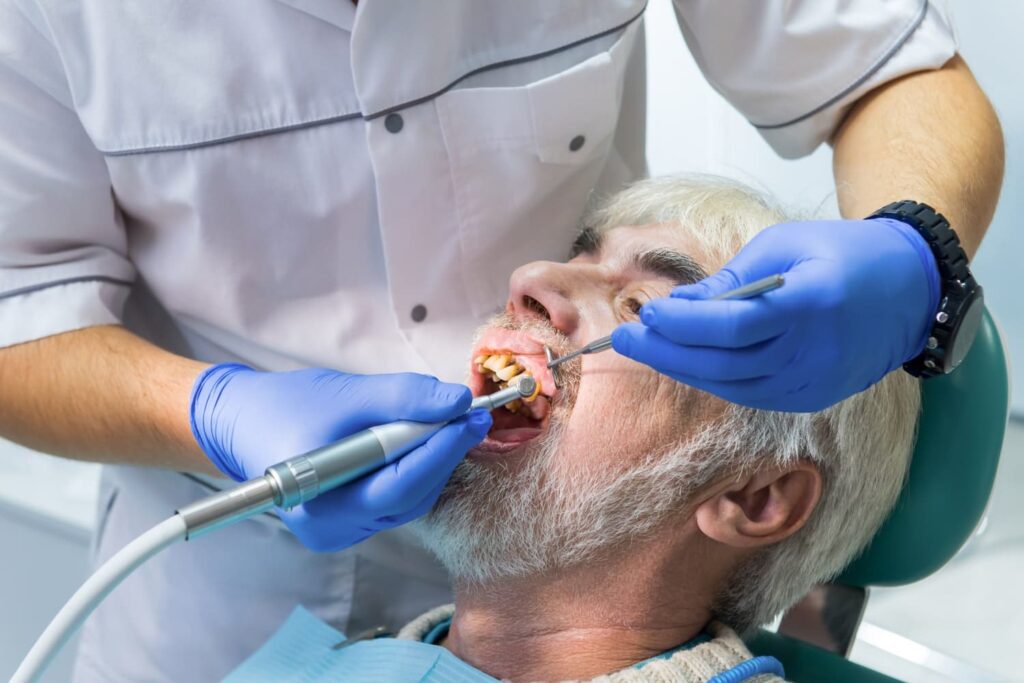
Why is smoking bad for your teeth?
Tobacco smoke contains nicotine — a neurotoxin that has many harmful effects on the smoker’s health. Smoking weakens the immune system, making the body more susceptible to infections. It also greatly increases the risk of periodontitis (gum disease) or general periodontal damage.
Yellow stains accumulate on the teeth, providing a favourable environment for bacteria. This leads to inflammation of teeth and gums. If these inflammations spread to the jaw bone, painful conditions may develop and teeth may become loose.
These deposits greatly increase the risk of damage to the periodontium. As a smoker, it is usually impossible to remove the stubborn nicotine and bacterial stains with normal toothpaste alone.
Moreover, smoking promotes the development of mouth cancer — another strong incentive to quit smoking. Smokers are significantly more likely to develop this malignant disease than non-smokers.

Is passive smoking just as harmful for the teeth as active smoking?

What dental problems can arise from smoking?
When smoking releases nicotine into the mouth, it damages the teeth in multiple ways. Yellow deposits on the enamel and an impaired immune system favour bacterial inflammation and the development of cavities.
The inflamed gum tissue becomes red, swollen and loose. If the inflammation spreads to the fibres of the periodontal apparatus, the teeth lose their support and may fall out. If it continues further, the cavities in the jaw bone that hold the teeth (alveoli) are also affected.
Bone loss leads to gum recession. The tooth roots become exposed and vulnerable. Without treatment, the damage advances quickly, and the teeth may eventually fall out because they no longer find enough support in the now-shallower alveoli.
What to do if the teeth are already damaged by smoking
Once teeth are damaged by smoking, brushing with an electric toothbrush or using mouthwash is usually not enough to reverse the damage. The yellow stains from nicotine and bacteria adhere too strongly to the tooth surface. Only a professional dental cleaning can remove these deposits.
Following cleaning, a bleaching treatment with hydrogen peroxide or carbamide peroxide can restore a healthy white colour to teeth. Visible improvement often occurs after just 15 minutes. For particularly persistent stains, whitening systems can be used — first results may already be visible after 14 days.
Quitting smoking prevents new yellow deposits forming on the tooth surface and stops further damage to teeth and the periodontal apparatus. Sense of smell and taste often normalise again — and skin may appear younger.
If gum inflammation has subsided, missing teeth can be replaced with dental implants. Implants anchored with a screw can be as stable as natural teeth.
Teeth with cavities should receive professional treatment and — if the enamel is heavily weakened — be protected with crowns.